
Last updated: Friday 9 January 2026
Reviewed by: Anne Brown
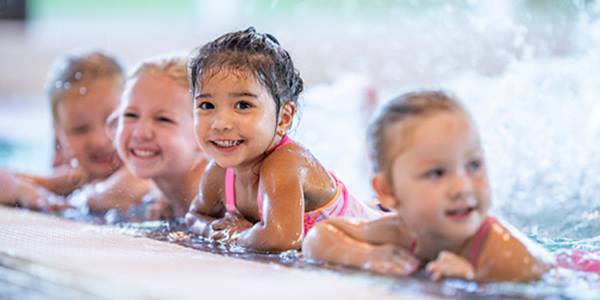
When your child starts swimming lessons, you want to be sure they enter classes at the right level. This will help them feel safe, comfortable and able to develop their skills.
At Kingswim, we’ll help you find the right level for your child. We’re experts at assessing children’s swimming abilities (it’s what we do every day) and we’ll chat with you about your child’s capabilities before you enrol. If we notice your child would benefit more from a different class, we’re happy to recommend a change.
To see which swimming lesson level might suit your child best, select the most relatable statement below:
- My child is completely unfamiliar with the swimming pool
- My child has some water skills, but won’t swim alone yet
- My child can confidently enter the water without me
- My child is ready to learn some swimming strokes
- My child can do most strokes and easily swim 50 metres
My child is completely unfamiliar with the swimming pool
If your child has never been to the pool before, or has only been a few times, they’re considered a beginner. They would benefit from a fresh introduction to swimming and water safety.
For babies and infants, we’d recommend these levels in Foundation program:
- Baby Play: Suitable for babies between 12 weeks and 6 months, you can bond with your baby in a relaxed environment while introducing them to water.
- Parent and Child: Suitable for 6 month old babies through to three year old toddlers, infants develop basic water skills with you in the water with them.
Our Independent program is designed for children aged 3 years and up. We offer classes to suit a wide range of ages, from toddlers to older children and teenagers.
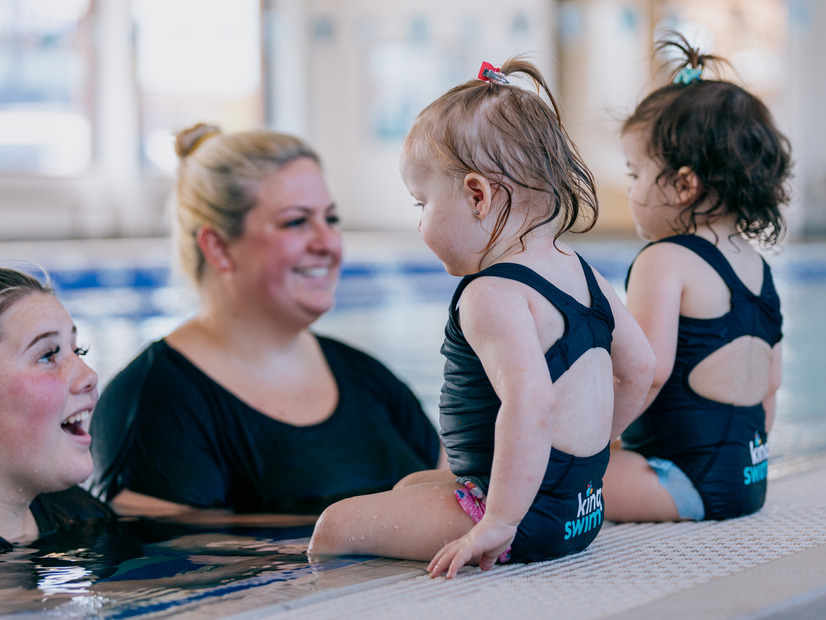
My child has some water skills, but won’t swim alone yet
For infants who have a few water skills but need parental support in the pool, we’d recommend the Transition levels in our Foundation program:
- Transition Deep: Suitable for children from 2 years of age, this level builds confidence, independence and essential water skills. We also introduce swim aids, flotation, survival skills and basic propulsion.
- Transition Shallow: Suitable for children from 2 years and 6 months, this level continues to develop swim skills and introduces standing on the pool floor (your child will need to be tall enough for this). It includes brief separation from the parent to help children get used to following instructions from the teacher, ready for swimming lessons.
Your child can stay in the Transition levels until they feel comfortable to progress to swimming solo in our Independent program. There’s no rush, as every child develops at their own pace.
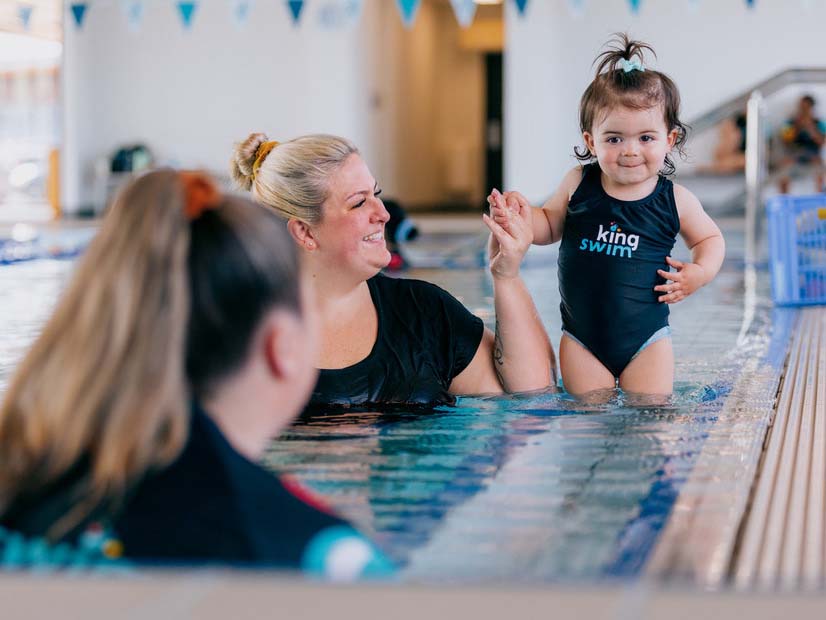
My child can confidently enter the water without me
Our Independent program is a great choice for children over three years old who are confident swimming without a parent, as it includes levels to suit children who already have some basic water skills.
Your child might join one of these levels in the Independent program:
- K1: Your child works on body position in the water, kicking, and building confidence.
- K2: Further work on the above, with the challenge of completing 3 metres of front kick with a kickboard, floating on back with assistance, and front push gliding with face in the water.
- K3: Your child tries the rocket-glide and kick, back kick and scull, and front overarm using a board.
- K4: Your child works on freestyle breathing and body position, with freestyle overarm action with correct breathing using a kickboard, back push-glide, and independent backstroke.
There’s little pressure at this level, as often children aren’t quite ready to learn formal swimming technique. Instead, we focus on having fun, growing in confidence, and introducing the building blocks for swim strokes. Parents are required to sit poolside, which gives new swimmers extra support and reassurance.
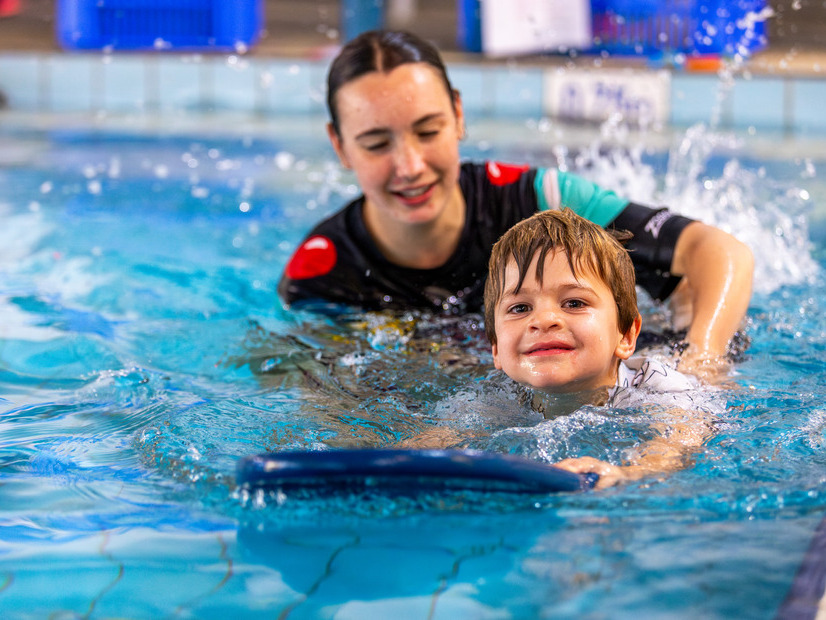
My child is ready to learn some swimming strokes
If your child is independent in the pool and has learnt some basic skills (like stability in the water and breathing), they may be ready to learn formal swimming techniques.
The best swim program for them would be our Competent program, which includes these levels:
- K5: Children work on their body position in the water and are introduced to freestyle, lateral kick and backstroke.
- K6: Children work towards swimming 16 metres freestyle using bent arm recovery, 16 metres backstroke with continuous arms, and on side breathing using lateral kick and a board.
- K7: Children solidify their knowledge of swimming strokes and ability to remain balanced and buoyant in the pool, working towards the goal of swimming 25 metres freestyle and backstroke.
- K8: Children move on to swimming 50 metres freestyle, and on breaststroke and front dolphin kick in a streamlined position.
My child can do most strokes and easily swim 50 metres
Children who are confident and proficient in the water would benefit from advanced swimming lessons. If this sounds like your child, we’d recommend our Graduate program.
This program includes the following levels:
- K9: Focuses on developing endurance and water survival skills. By the end of this level, your child easily complete 200 metres freestyle, basic butterfly, and breaststroke with correct timing.
- K10: Children develop endurance skills to swim 400 metres freestyle, learn butterfly stroke with correct timing, and experience a survival clothed swim.
- K11: Children perfect their technique across all strokes and swim 1000 metres freestyle to further build endurance. When they graduate this level, your child will be invited to join the Kingswim Squad.
These advanced levels will take your child from a confident to swimmer to an expert in the water. They'll be able to master swimming strokes, swim efficiently with correct form, build endurance and gain important survival skills. Whether they want to compete in a swim squad or simply swim for fun, these skills will help your child stay safer, avoid injury and be the best swimmer they can be.
Chat to us
For further advice on what level of swim class best suits your child, you’re welcome to contact us. You can come along for a free trial lesson where we’ll assess your child’s capabilities and match them to the right program.